An Interdisciplinary Community at IISER Pune
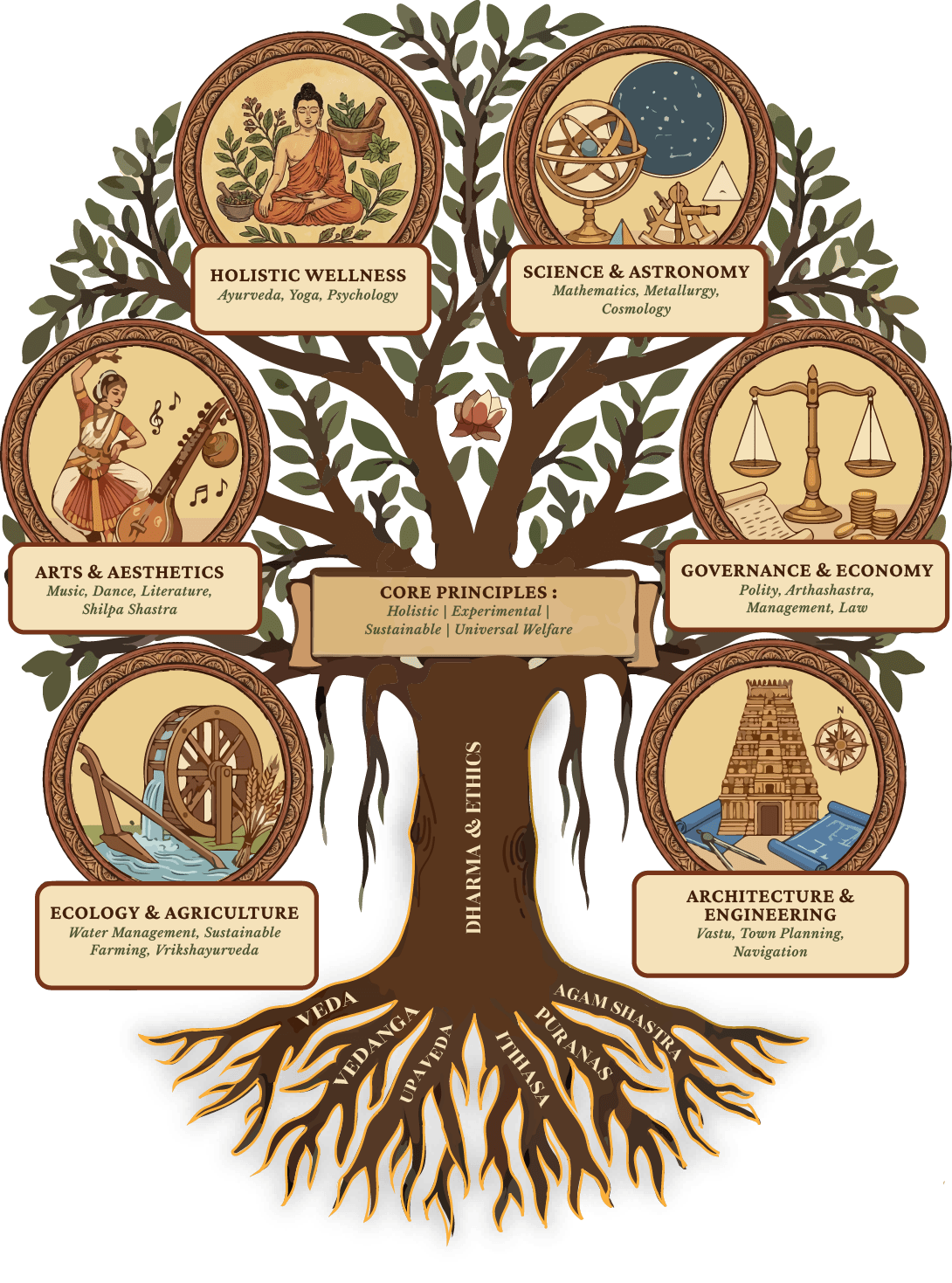
Bharat has long been known for its civilizational and cultural heritage, and for scientific and technological knowledge that shaped India and contributed to the growth of other parts of the world. The Indian Knowledge System (IKS) is the broad term for this inheritance, which thrived over millennia and is documented in numerous treatises:
Traditional knowledge takes a holistic approach, while modern science takes a reductionistic one. Together they offer a strong platform for a resilient future. Reconnecting with IKS in the modern context is essential for a sustainable and equitable world with a moral order.
आत्मा वा अरे द्रष्टव्यः श्रोतव्यो मन्व्यो निदिध्यासितव्यः — 'The Self, indeed, is to be realized: heard, reflected upon, and deeply contemplated.' — Bṛhadāraṇyaka Upaniṣad 2.4.5
Exploring the Depths of Ancient Indian Scientific Knowledge
Exploring ancient Indian contributions to astronomy, astronomical observations, mathematical principles, and their applications in understanding the cosmos and developing computational methods.
Metals in medicines and materials: investigating ancient Indian metallurgical practices, the use of metals in traditional medicine, and advanced material science from ancient texts.
Understanding ancient Indian medical wisdom, personalized medicine approaches, herbal remedies, and their relevance to modern healthcare and wellness.
Ancient temple building technology: examining the engineering marvels, architectural principles, and construction techniques that created enduring monuments.
Evolution of scientific Indian language and grammar: studying how ancient languages facilitated the documentation and transmission of scientific knowledge.
To provide a platform for interdisciplinary scientific dialogue that bridges ancient wisdom with modern science, bringing together scholars and enthusiastic students from different disciplines to encourage exploration, research, and collaboration. In line with the National Education Policy (2020), we emphasize revisiting and integrating ancient Indian knowledge, and understanding it from a modern scientific perspective.
Etymology, Philosophy, and Identity
प्रति (prati) + अभि (abhi) + ज्ञा (jñā) — प्रति means 'again, back, toward'; अभि means 'toward, directly, distinctly'; ज्ञा means 'to know, to recognize'. Together: 'to recognize again what was already there.' In the context of IKS, this reflects the idea of returning to classical texts and recognizing the ideas, knowledge, and insights within them.
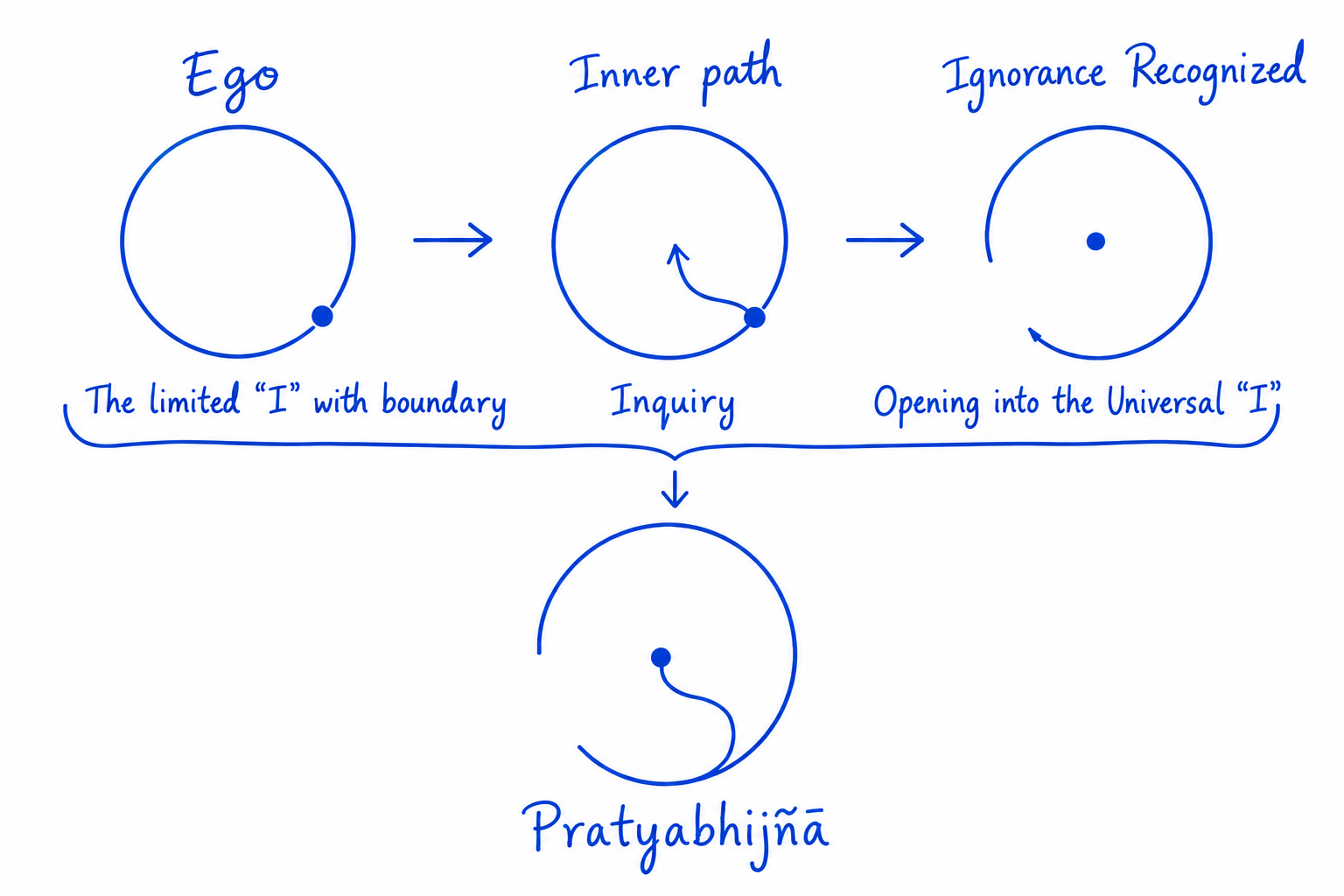
In Kashmir Śaivism, Pratyabhijñā refers to the recognition of one's true nature. The truth is not something newly acquired; it is already present and becomes evident through recognition. The limited 'I' → Recognition → The Universal 'I'. This is the philosophical core that guides our club's inquiry into Indian Knowledge Systems.
A year-round rhythm of learning, from fortnightly conversations to a national conference
Immersive, hands-on workshops on core IKS themes that turn classical ideas into lived practice.
Our workshops are designed to engage attendees, not only with knowledge but with hands-on experience. Past and planned workshops include:
A monthly lecture by an eminent scholar.
A monthly lecture by an eminent scholar, bringing authoritative voices on Indian knowledge traditions to our community.
The topics for these lectures are shaped by what our discussion sessions reveal about the community’s interests and gaps.
A fortnightly discussion series, beginning across three institutes.
Held at different institutes, so people around each campus can join easily.
Relaxed discussions invite everyone into IKS. Seeing what participants know, and what they do not, shows which topics deserve a high-quality expert lecture.
Within two years, discussion quality will rise significantly, helping us identify research proposals and people keen to pursue research.
Our citywide celebration of Indian history, knowledge, and culture.
From अनु (anu, “after, following”) and ईक्ष् (īkṣ, “to see, examine”): not merely seeing something, but examining it through careful reasoning and critical inquiry.
Anvīkṣā 2026: Sunday, November 15, 2026 · LHC, IISER Pune. Quiz, curated workshops and a Vipassana session.
Event details & registration ↓A national gathering of scholars, researchers, and students examining Indian knowledge through science and technology.
Looking for the National Conference on IKS (March 7, 2026) materials? Speaker profiles, session chairs, patrons and organizers, sponsors, and lecture recordings are archived.
View Conference Archive →Conference enquiries & sponsorship: nciks@acads.iiserpune.ac.in
Our citywide celebration of Indian history, knowledge, and culture
Etymology: अनु (anu) + ईक्ष् (īkṣ) — अनु means 'after, following'; ईक्ष् means 'to see, observe, examine'. Together: "not merely seeing something, but examining it through careful reasoning and critical inquiry."
Registration Deadline: November 10, 2026 | All workshops are FREE to attend
In collaboration with: Hindi Club • Marathi Club • Yogen Club • Artha Club
कस्मिन्नु भगवो विज्ञाते सर्वमिदं विज्ञातं भवतीति॥
"What is that which, when known, makes all this known?" — Muṇḍaka Upaniṣad 1.1.3
Faculty Coordinator and Student Coordinators

The framework that guides how our club is organised and run
Read the official constitution of the club, available online and as a PDF to download and share.
Wear the spirit of Pratyabhijñā
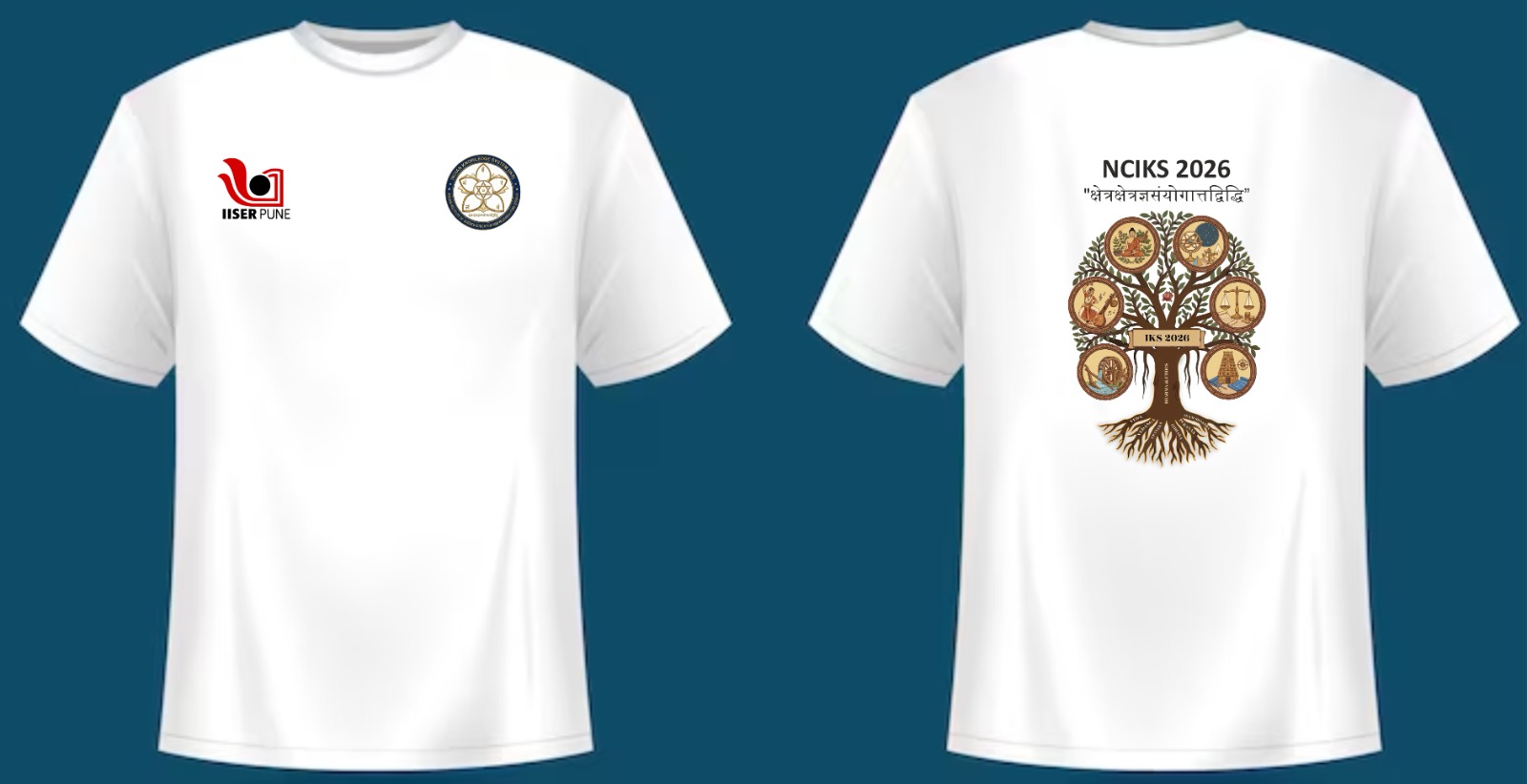
Help us carry Indian Knowledge Systems into the classroom, the lab, and the city
Our workshops, guest lectures, discussion series, Anvīkṣā, and national conference depend on partners who share our belief in India’s intellectual heritage. Sponsor or collaborate with us and be part of that story.